
Frequently Asked Questions
APPs reached an agreement with the hospital to hold an election on Wednesday, January 14 and Friday, January 16. Vote YES!
Election Dates:
Wednesday, January 14 at Sparrow Main Hospital in the Auditorium, Lower Level (by Neumann/South Elevators) from 5:30 am - 9:00 am, 11:00 am - 1:00 pm, and 5:00 pm - 9:00 pm.
Friday, January 16 in the Sparrow Professional Building, Second Floor (HR) Conference Room from 12:00 pm - 4:00 pm.
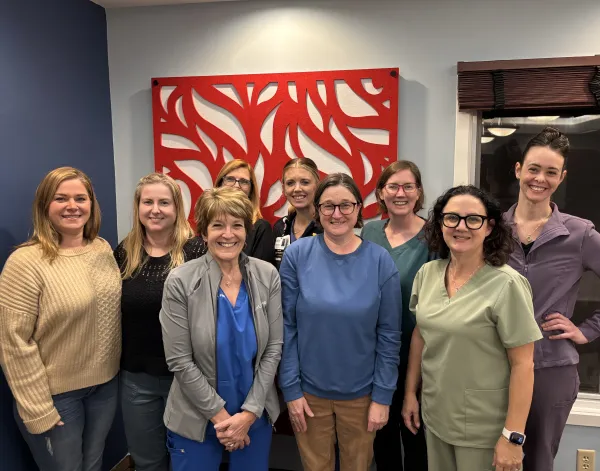
This agreement is a major win and means:
- APPs avoid a lengthy hearing and get to an election sooner
- The hospital would most likely have contested the eligibility of TCI or other departments. This agreement guarantees that TCI, Ionia, and Eaton are included
- APPs will form an APP-only bargaining unit (NPs, PAs, and CNMs) with the Michigan Nurses Association
- If APPs win, we will elect our own bargaining team, create a local name and bylaws, and negotiate APP-specific contract language.
Wait, so we won’t be part of PECSH?
- Yes, while the Organizing Committee would have loved to join PECSH-MNA, we felt it was too risky to delay the vote or jeopardize TCI’s eligibility.
- We can still propose all the language we like from the PECSH contract with the stance there should be one standard across the institution. That’s what PT/OT and RNs did at Sparrow Homecare and both bargaining units won excellent first contracts.
Why do APPs want a union? Here are just some of the reasons identified by the Organizing Committee:
- In 2023, Sparrow eliminated Urgent Care’s ATO. In Sept 2025, they announced their intention to do the same to other departments
- The hospital eliminated on-call pay for several departments
- APPs are being asked to do more with less without a real say in our practice or profession
- The increase of short staffing, for example, there is often only one or two APPs staffed at Urgent Cares
- Improved pay and benefits
Why are we joining a predominantly nursing union?
- MNA represents healthcare workers AND nurses. PECSH represents over 57 classifications. True, most are RNs but that doesn’t mean only their interests are represented. In fact, in the last contract, a big issue was getting a raise specifically for the clinical laboratory scientists because they were paid under market.
- APPs don’t want to be pitted against each other; we are stronger together, with PAs, NPs, CNMs in one union
Hearing things from management about APPs forming a union?
- Hospitals always fight workers organizing. Management will say all kinds of things which boil down to: MNA will tell you what to do. When in reality, APPs will form our own local bargaining unit under the banner of MNA, we decide what we want, and what we are willing to do to win those demands. Almost every major decision in our union will be made by voting or consensus
- Right now, management can change whatever they want, whenever they want. Do you trust management to make it better on their own? If forming a union didn’t do anything, why is management spending time meeting with you one-on-one?
What did the email about our wages on Friday 1/2 mean?
- The hospital’s email states that “all wages, benefits, and working conditions will remain the same under the current letters of employment at this time.” In response, MNA has filed an Unfair Labor Practice charge with the National Labor Relations Board, asserting that this action violates federal labor law and constitutes an attempt to influence APPs’ vote. MNA will aggressively fight to ensure that APPs receive their regular annual raises, backdated to January 1st or to any other date they should have been given.
Will our wages and benefits be frozen after APPs win but before a contract?
- The hospital must maintain the status quo, which means they cannot make drastic cuts AND if they always give a raise or step increase at a certain time, they should legally continue doing so. For example, when Sparrow Home Care was bargaining their first contract, management attempted to not give annual raises. Union members pushed back and management agreed they were wrong and gave everyone their normal raises.
What can we expect from the hospital management?
- The hospital doesn’t want to lose power and money. They may hire expensive anti-union consultants called “union busters” to either intimidate or deceive APPs against MNA. Once you win your election and have a union, that ends! They will no longer be able to make unilateral changes from staffing, salaries, or benefits. Now, you have a voice.
- For example:
- The “Carrot” giving out concessions, such as reversing unpopular decisions (like the decision to take away ATO), emails saying they are listening, and admin rounding
- The “Stick” campaign to smear the union: saying MNA can’t do anything about staffing, they force you to strike, just want your dues money, and you won’t be able to go to your supervisor anymore.
How much are dues?
- Dues are $67.72 a month, $812.64 a year
- No one pays dues until we vote to approve our first contract!
- The average first contract gains far exceed dues. PECSH got 16.5%+ raises over three years and U of M got 22%+ over 4 years.
Does everyone have to join the union?
- In PECSH, yes, everyone pays for the representation they receive from their union, because the members decided to fight for a “union (united) shop” vs. “open or split shop.” When everyone pays for representation, there is a greater basis for building unity. We have more power to demand better pay, benefits, and working conditions. But again, no one pays until you approve a contract where the wages and benefit increases outweigh the cost.
What about strikes?
- Members decide to strike, not MNA. A strong majority must vote for it in a secret ballot or the strike would not succeed.
- 90% of all negotiations have been settled without strikes.
- Strikes are a last resort; but workers have won great contracts as a result. The best way to avoid strikes is to be prepared and able to run them. There are many other ways to get a good contract like petitions, delegations, media campaigns, and other forms of collective activity.